Latest Botanical & Nutraceutical Insights
Discover expert research, clinical evidence, and industry analysis on active botanical ingredients and natural health solutions.
2026 Top Types of Cranberry Extract for Urinary Health
Table of Contents
- What Cranberry Extract Is and How It Supports Urinary Health
- Key Types of Cranberry Extract Available in 2026
- Active Compounds and Potency Markers in Cranberry Supplements
- How to Compare Forms, Dosages, and Product Quality
- Safety, Interactions, and Choosing the Right Extract
- FAQS
- Conclusion
- Related Posts
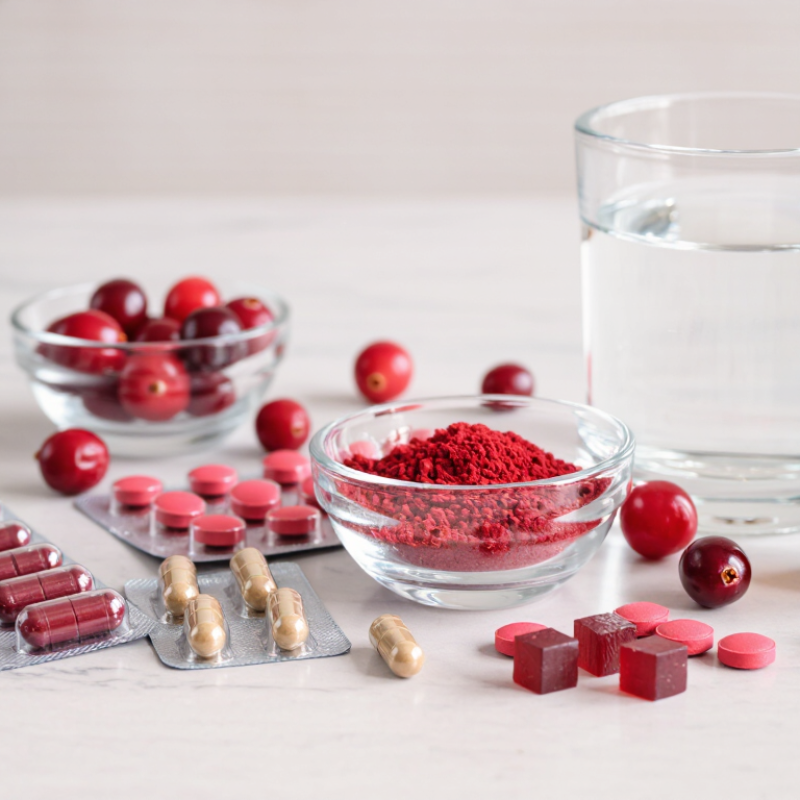
Cranberry Extract for Urinary Health remains a popular topic for people seeking practical, evidence-informed support for urinary wellness. In 2026, consumers may encounter capsules, tablets, powders, gummies, liquids, and standardized extracts on store shelves. Each format offers different strengths. Dosage, concentration, added ingredients, and product testing can vary considerably.
The most useful comparison begins with the extract itself. Some products highlight proanthocyanidins, often called PACs, which are studied for their possible role in supporting urinary tract function. Others focus on convenience, flavor, fast dissolution, or lower sugar content. A glass of water beside a morning capsule may seem simple, yet consistency often matters more than attractive packaging. That said, cranberry products are not interchangeable, and a higher number on the label does not automatically mean better quality.
This guide examines the top types of cranberry extract for urinary health and explains how they differ in form, formulation, and practical use. It also considers third-party testing, ingredient transparency, serving size, and potential interactions. Read the label carefully. Small details matter.
Evidence is encouraging in some areas but remains mixed, depending on the product and the individual. Cranberry extract should not replace professional care for pain, fever, blood in the urine, or suspected infection. Those symptoms need prompt medical attention. A thoughtful choice combines reliable research, realistic expectations, and guidance from a qualified healthcare professional. Some claims may still be overstated. That is worth remembering.
What Cranberry Extract Is and How It Supports Urinary Health
2026 Top Types of Cranberry Extract for Urinary Health
Cranberry extract is a concentrated form of compounds found in whole cranberries. It commonly contains polyphenols, including proanthocyanidins, often called PACs. These compounds may make it harder for some bacteria to attach to urinary tract walls. That action is different from killing bacteria. This distinction matters.
Extracts vary by concentration, processing method, and the amount of active PACs they provide. Some products use powdered fruit, while others use standardized extracts. A label showing cranberry amount alone may not explain its practical strength. Checking the stated PAC content can offer better guidance. Still, labels are not always perfectly clear.
For some adults, cranberry extract may support urinary comfort and help reduce the recurrence of uncomplicated urinary tract infections. Evidence is mixed, and results differ between individuals. It should not replace medical care for burning urination, fever, back pain, blood in urine, or worsening symptoms. Those signs need prompt professional attention.
More is not automatically better. High doses may cause stomach discomfort, and people using certain medicines should ask a healthcare professional before taking supplements. Personal experience can be useful, but it is not proof. I once assumed a stronger extract would work better; that assumption was too simple. Product quality, regular use, hydration, and individual health may all influence the outcome.
2026 Top Types of Cranberry Extract for Urinary Health
What Cranberry Extract Is and How It Supports Urinary Health
Proanthocyanidins (PACs) are the cranberry compounds most often studied for urinary-health support. Human studies commonly evaluate a standardized target of approximately 36 mg PAC per day, although products differ in PAC content, extraction method, serving size, and labeling. Capsules and powders are usually easier to standardize than juice or whole-fruit products. Cranberry products may help reduce the risk of recurrent urinary tract infections in some groups, but they do not treat an active infection.
Chart note: 36 mg represents a commonly studied daily PAC target, not the guaranteed content of every product. PAC measurement methods and product formulations vary.
Key Types of Cranberry Extract Available in 2026
In 2026, cranberry extracts mainly appear as whole-fruit powder, juice concentrate, and PAC-standardized extract. Whole-fruit powder retains fiber and several polyphenols, but its proanthocyanidin content can vary between batches. Juice concentrate offers familiar liquid use, although it may contain considerable natural sugar. PAC-standardized extract focuses on A-type proanthocyanidins, the compounds most discussed in urinary-health research. The label can still mislead.
According to IMARC Group’s 2024 cranberry market report, the global cranberry market reached approximately US$3.3 billion in 2023, supported by growing supplement demand. This commercial growth makes quality testing more important. Buyers should look for a stated PAC amount, extraction ratio, serving size, and third-party contaminant testing. A vague “cranberry equivalent” number is not enough. The 2023 Cochrane review found that cranberry products may help reduce recurrent urinary tract infections in some groups, but results differed by product and population. Evidence does not support using extracts to treat an active infection. I would also avoid assuming that a higher PAC dose is automatically better. Research methods, formulations, and adherence remain inconsistent. Some people prefer capsules, while others manage liquids more easily. Individual tolerance matters.
Active Compounds and Potency Markers in Cranberry Supplements
2026 Top Types of Cranberry Extract for Urinary Health
Active compounds matter more than a bright label or a large capsule count. Cranberries contain proanthocyanidins, commonly called PACs. A-type PACs receive particular attention because their structure may help reduce bacterial adhesion in the urinary tract. Evidence remains mixed, however. Cranberry supplements support urinary health for some adults, but they do not treat an active infection.
Extracts differ in concentration, processing, and testing. Standardized PAC content is one useful potency marker. Check the amount per serving, not only the total extract weight. A product listing 36 milligrams of PACs may differ substantially from one listing 36 milligrams of unnamed polyphenols. The testing method also matters. DMAC testing can estimate total PACs, while more detailed laboratory methods may distinguish PAC structures more precisely. Labels are not always transparent.
Look for independent quality testing, clear serving instructions, and batch information. Sugar-free capsules may suit people avoiding sweetened cranberry drinks, while whole-fruit powders provide a broader mixture of compounds. They are not automatically stronger. I would also review medication use, kidney history, and pregnancy with a qualified healthcare professional. Warfarin interactions are often discussed, but the evidence is not perfectly consistent. That uncertainty deserves honesty. Stop self-treatment if burning, fever, back pain, or blood in urine appears, and seek medical care promptly. Small details matter.
| Product Type | Typical Source or Format | Main Active Compounds | Primary Potency Marker | Common Analytical Method | Indicative Composition or Labeling Range | Urinary-Health Relevance | Key Quality Considerations |
|---|---|---|---|---|---|---|---|
| Whole Cranberry Fruit Powder | Freeze-dried or spray-dried cranberry fruit, usually supplied as a powder | Proanthocyanidins (PACs), anthocyanins, flavonols, organic acids, and naturally occurring sugars | Total cranberry polyphenols and total PAC content | HPLC or LC-MS for selected polyphenols; DMAC assay for total PACs | Highly variable and generally not standardized; PAC values are often reported in the low single-digit percentage range by weight | Provides a broad cranberry phytochemical profile, but the amount of active PACs per serving can vary considerably | Confirm moisture, botanical identity, PAC assay method, and serving-size equivalence; fruit powder is not automatically equivalent to a concentrated extract |
| Cranberry Juice Powder | Dehydrated cranberry juice or juice concentrate, commonly made water-soluble for capsules or drink mixes | Organic acids, anthocyanins, flavonols, small amounts of PACs, and soluble fruit solids | PAC content together with soluble-solids or Brix specification | HPLC for anthocyanins and organic acids; DMAC or HPLC for PACs; refractometry for Brix | Usually lower in PAC concentration than a PAC-enriched extract; the exact level depends on juice processing and concentration | Useful when a product is intended to resemble cranberry juice, but urinary-health potency should not be inferred from fruit-equivalent weight alone | Check whether the powder is sweetened, diluted with carriers, or standardized only by fruit equivalent rather than by PAC content |
| Cranberry Polyphenol Extract | Extract produced from cranberry fruit using aqueous, hydroalcoholic, or other food-compatible extraction processes | PACs, anthocyanins, flavonols, and phenolic acids | Total polyphenols and total PACs, preferably with a defined assay method | Folin-Ciocalteu for broad total phenolics; DMAC for PACs; HPLC or LC-MS for individual compounds | Often more concentrated than fruit or juice powders, but there is no universal concentration standard across suppliers | Can deliver more consistent polyphenol exposure than non-standardized fruit powder when the extract is supported by a certificate of analysis | Total polyphenols are not interchangeable with PACs; the specification should identify the units, reference standard, and assay validation |
| PAC-Standardized Cranberry Extract | Concentrated extract adjusted to provide a declared amount of cranberry PACs per capsule or serving | Predominantly A-type and B-type proanthocyanidins, with smaller amounts of anthocyanins and other polyphenols | Declared milligrams of PACs per serving, commonly measured by DMAC or a validated HPLC-based method | DMAC for total PACs; HPLC or LC-MS for PAC profile and identity; method details should accompany the result | Many supplements declare approximately 18–36 mg PACs per daily serving, but label values are not directly comparable unless the assay method is the same | Among the most practical formats for dose comparison because the key marker is stated as an amount rather than only as fruit equivalent | Verify whether the declared PAC value is based on DMAC, A2 PAC, or another calculation; these values should not be treated as interchangeable |
| A-Type PAC-Enriched Extract | Extract selected or processed to increase the relative proportion of A-type interflavan linkages | A-type PACs, including cranberry-associated oligomeric proanthocyanidins | A-type PAC fingerprint or quantified A-type PAC fraction | HPLC, LC-MS, or LC-MS/MS profiling; structural confirmation may use validated reference standards | Content varies by raw material and purification process; a total-PAC number alone does not establish the proportion of A-type structures | Relevant for formulations that want a more defined cranberry PAC profile rather than a broad, non-standardized polyphenol mixture | Look for chromatographic identity data, not merely a claim that the extract is “high in PACs”; A-type and B-type PACs have different structures |
| Purified Cranberry PAC Fraction | Further-enriched fraction separated from cranberry fruit extract to reduce sugars, acids, and non-PAC components | Concentrated proanthocyanidin oligomers and polymers, with limited residual anthocyanins and organic acids | PAC purity, PAC molecular-weight distribution, and A-type/B-type profile | DMAC for total PAC estimation; HPLC or LC-MS for profile; gel-permeation or related techniques for molecular-size distribution | Generally higher PAC density than whole-fruit or juice powders, although commercial specifications differ substantially | Provides a more concentrated source of the compound class most often used to characterize cranberry urinary-health supplements | High PAC percentage does not by itself prove superior clinical performance; confirm solubility, excipients, residual solvents, and batch consistency |
| Cranberry Seed Extract | Extract prepared from cranberry seeds, often marketed as a separate botanical fraction | Seed proanthocyanidins, flavan-3-ols, fatty acids, and seed-derived phenolic compounds | Total phenolics or PACs, plus seed-oil or fatty-acid specifications when relevant | HPLC or LC-MS for phenolics; DMAC for PACs; GC for fatty-acid composition | Composition differs from cranberry fruit extract and is not directly represented by cranberry fruit PAC data | May contribute antioxidant and polyphenol content, but it should not automatically be considered equivalent to a fruit-derived urinary-health extract | Confirm the plant part used; a label stating “cranberry extract” should specify whether the material comes from fruit, seed, or a mixed source |
| Cranberry Extract with Organic-Acid Standardization | Fruit or juice-derived extract standardized partly by its organic-acid profile | Quinic acid, citric acid, malic acid, benzoic acid, and variable amounts of PACs and anthocyanins | Organic-acid profile, usually combined with a PAC or polyphenol specification | HPLC or ion-exclusion chromatography for organic acids; HPLC or DMAC for polyphenols and PACs | Organic-acid concentrations vary with cultivar, ripeness, processing, and concentration; they are not a substitute for PAC quantification | Can help authenticate a cranberry-derived ingredient and distinguish juice-like materials from highly purified PAC fractions | Organic-acid standardization alone should not be used as the principal potency marker for cranberry PAC supplements |
| Standardized Cranberry Extract with Anthocyanin Profiling | Fruit extract retaining or enriching cranberry pigments, typically supplied in capsules or powders | Anthocyanins such as cyanidin and peonidin glycosides, along with PACs and flavonols | Total anthocyanins and individual anthocyanin profile | HPLC-UV or HPLC-DAD; LC-MS can provide more detailed compound identification | Anthocyanin levels are usually secondary specifications and can decline with heat, light, oxygen, and prolonged storage | Useful for characterizing fruit-derived polyphenol quality, but anthocyanin content should not be used as a proxy for PAC dose | Packaging should limit light, heat, oxygen, and moisture; the label should state the reference compound used for reporting anthocyanins |
| Interpretation note: Cranberry supplement potency is best compared using the same analytical method, the same reference standard, and the same serving basis. DMAC reports a broad total-PAC estimate and is not identical to a quantified A-type PAC value. Product composition can vary with cultivar, harvest conditions, extraction solvent, purification, storage, and added carriers. The table describes ingredient categories and common quality markers; it does not establish that any specific product prevents or treats urinary-tract disease. | |||||||
How to Compare Forms, Dosages, and Product Quality
2026 Top Types of Cranberry Extract for Urinary Health
Cranberry capsules, tablets, liquids, and gummies can differ greatly. Compare the active proanthocyanidin (PAC) amount, not only “cranberry equivalent.” A 2023 Cochrane Review examined 50 studies involving 8,857 participants. It found possible benefits for women with recurrent urinary tract infections, children, and some higher-risk groups. However, the evidence was not equally strong for everyone.
Dosage deserves careful attention. Many clinical studies used about 36 mg of PAC daily, but this is not a universal medical standard. Look for PAC measurement using a recognized method, such as DMAC testing. A product listing only cranberry powder may hide the meaningful dose. Capsules often provide more consistent dosing than liquids or gummies. Yet, sweeteners and serving size can change the comparison. No form wins every time.
Tips: Check the Supplement Facts panel, testing date, lot number, and independent quality verification. Avoid products promising to treat an active infection. Painful urination, fever, back pain, or blood in urine needs medical assessment. Cranberry may also require caution with certain medicines, including warfarin. The American Urological Association recognizes cranberry as a prevention option, not a replacement for diagnosis or treatment. Labels can look precise, but product quality still varies. My practical choice would favor transparent PAC data over attractive packaging.
Safety, Interactions, and Choosing the Right Extract
Cranberry products are not interchangeable. Whole-fruit powder contains fiber and natural compounds, while concentrated extracts provide more controlled amounts. For urinary health, look for proanthocyanidins, often called PACs, rather than cranberry weight alone. A clearly stated PAC amount is more useful than vague claims about “strength.” Capsules may be convenient, but sweetened liquids can add substantial sugar. The evidence is not perfect.
Safety deserves equal attention. Cranberry is generally tolerated, although stomach discomfort, loose stools, or allergic symptoms can occur. People with a history of calcium oxalate kidney stones should ask a clinician before using concentrated products. Warfarin interactions remain uncertain, but caution is sensible because individual responses vary. Anyone taking regular medicines, managing diabetes, pregnant, or breastfeeding should seek professional advice.
“Natural” does not mean risk-free.
Tips: Choose a product with independent quality testing and a transparent PAC amount. Follow the label instead of assuming more works better. Drink adequate water, but do not use cranberry extract to delay care for fever, back pain, vomiting, or painful urination. These symptoms may need prompt medical assessment. Check inactive ingredients carefully, especially sweeteners and common allergens. I would also record any new symptoms for several days. That simple step is easy to overlook, yet it can reveal whether the product is helping or causing problems.
FAQS
Cranberry extract concentrates compounds from cranberries, including proanthocyanidins, often called PACs. It is not the same as whole fruit.
PACs may make it harder for some bacteria to attach to urinary tract walls. They do not kill bacteria. Results vary.
No. It should not replace medical care for painful urination, fever, back pain, vomiting, or blood in urine.
Capsules and tablets often provide more consistent dosing. Liquids and gummies may contain added sugar or different serving sizes.
Check the PAC amount, testing method, lot number, testing date, and independent quality verification. Cranberry weight alone may mislead.
Some studies used about 36 milligrams of PACs daily. This is not a universal medical standard. Follow professional advice.
Some people report stomach discomfort or loose stools. Allergic symptoms can also occur. More is not automatically better.
Ask first if you take regular medicines, use blood-thinning medicine, have kidney stones, manage diabetes, or are pregnant or breastfeeding.
No. Natural products can still cause problems or interact with medicines. I once assumed stronger meant better, but that was too simple.
Conclusion
Cranberry Extract for Urinary Health is a concentrated supplement derived from cranberries and commonly used to support the body’s natural urinary defenses. In 2026, available forms may include standardized powders, capsules, tablets, gummies, and liquid extracts. Their benefits and consistency can vary according to processing methods, concentration, and the presence of naturally occurring compounds such as proanthocyanidins, which are often used as key potency markers.
When comparing products, consumers should review the labeled extract amount, standardization details, serving size, added ingredients, and quality testing. Different forms may suit different preferences, but dosage should follow the product instructions or professional advice. Cranberry extracts are generally well tolerated, although some people may experience digestive discomfort. Those with a history of kidney stones, certain medical conditions, or regular medication use should seek healthcare guidance before taking them. Choosing a clearly labeled, quality-tested extract can help support informed and responsible use.

Blog Tags: